
Have you had the privilege of witnessing a story being told at a Steiner kindergarten?
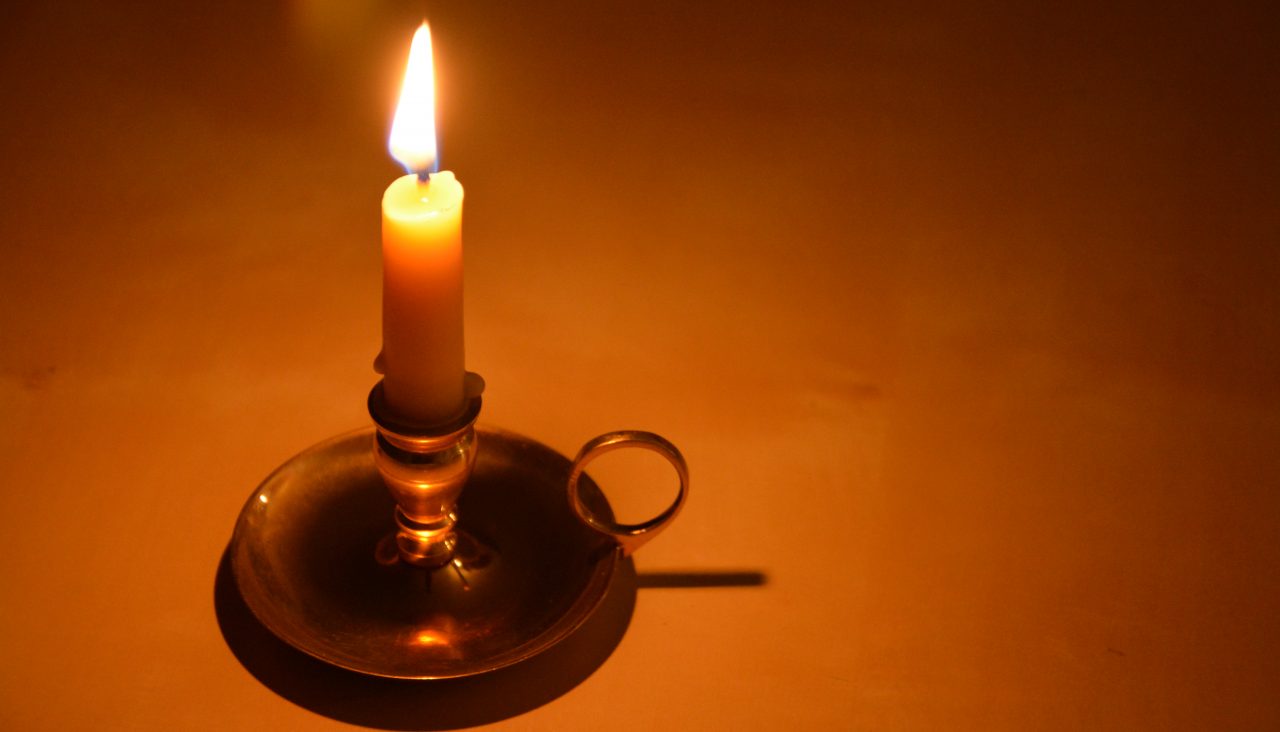
I can still remember vividly our first day at Master C’s Steiner playgroup, when the group leader, Leanne, began her soft song of “it’s time to tell a story, it’s time to tell a tale…”, and watching in amazement as all the children immediately stopped their boisterous play, rushed over to a corner of the room where Leanne had settled in front of a candle and some objects concealed under a silk cloth. The focus and curiosity radiating from the children was palpable. With smooth, deliberate movements Leanne lit the candle and carefully removed the covering cloth to reveal a scene beneath which included a small needle felted doll sitting on a beige scarf, alongside a blue scarf that clearly represented water or the ocean. She began to weave her short story, a verse about a boy named Sammy who was playing with his ball on the beach before kicking it accidentally into the sea, and the kind fisherman who retrieved it for him. The children craned their necks to get a better look, rising onto their knees; yet they were totally silent and absorbed. Even Master C, who had never seen a story told in this way with this kind of ceremony, seemed to sense the “specialness” of the moment and remained quiet and riveted to the story. At its conclusion, Leanne held the candle snuffer to her ear, listened for a secret whisper from the candle fairy, then smiled sweetly and extended the snuffer to the chosen child. He came forward very carefully, grasped the candle snuffer and proceeded to extinguish the flame of the candle with utmost care. With this, the spell was broken and the children seemed to take in a great breath of air before jumping up to run off to play outside while the mothers began a craft.
‘It’s time to tell a story, it’s time to tell a tale…’
I, for one, couldn’t believe the magic I had just witnessed. It had honestly never occurred to me to present a story to Master C in this way, despite the fact that I spent 3 years of my life training to be a professional stage actor – a professional storyteller! I was adept at weaving stories while snuggled up in bed with Master C at bedtime, or during meal times, long car rides and in the doctor’s waiting room, and we of course read mountains of books from the time he was very young, but the experience of watching storytelling as it is done in a Steiner classroom had me enchanted, and convinced.
Since that day in playgroup, I’ve done my best to bring this kind of reverence and effort to our storytelling at home. With the slow acquisition and creation of a few props, and some creativity in sourcing from what we already had around the house, we have managed to bring an entirely new level of magic into the stories we weave for our children at home, and I am yet again struck by how grateful I am to have stumbled upon Steiner education and to be able to implement these things into my kids’ childhood.
To begin, you don’t need much in the way of props.
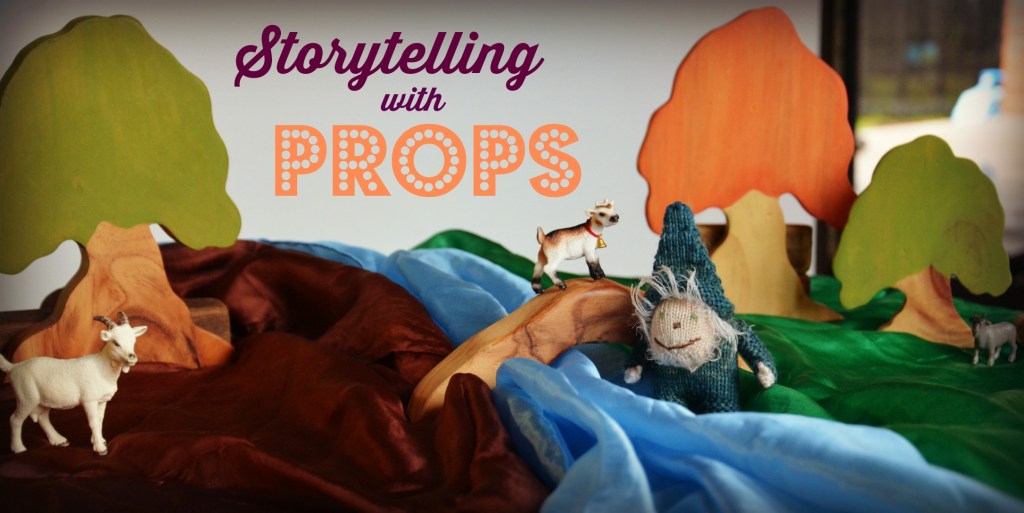
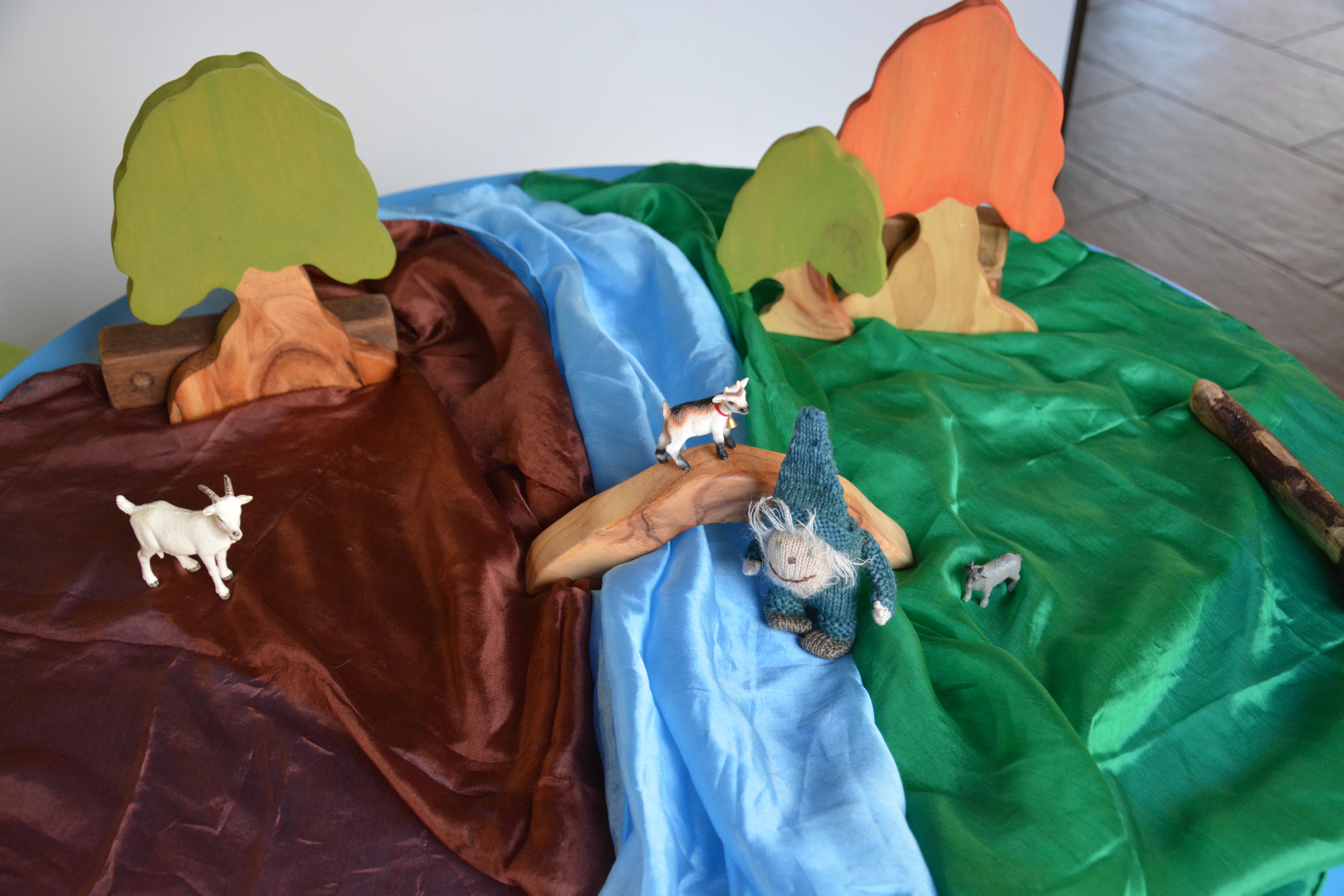
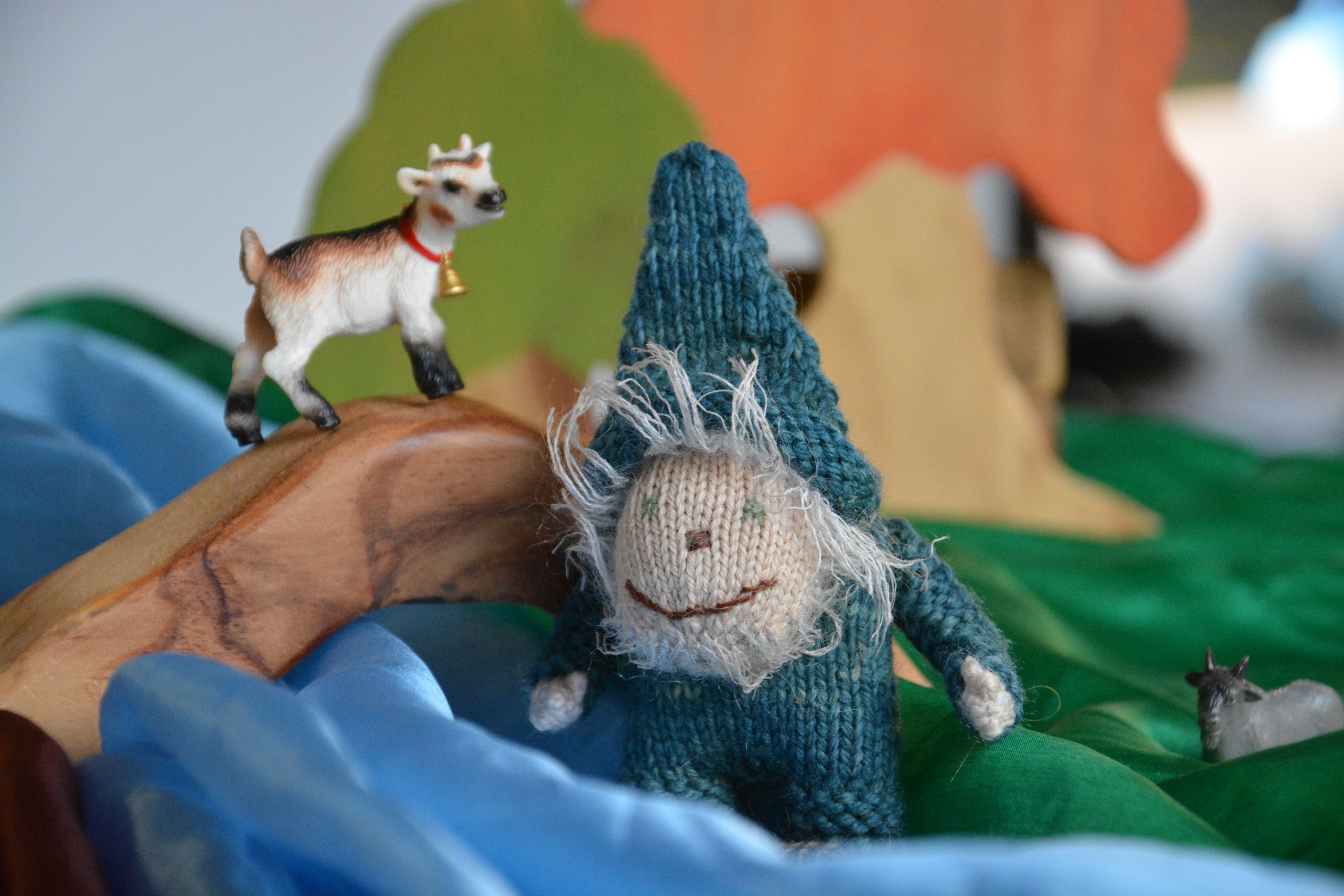
A few pieces of cloth in solid nature colours (I started with green for grass, blue for water, brown for earth, white for snow), some bits and bobs from nature such as pine cones, sea shells, sticks or acorns, and some characters to tell your tale. I purchased a few play silks online but you could easily use whatever you have on hand to begin with (we did). You may choose to make your own characters (needle felted or peg dolls work well), use toys you already have on hand or, if you squeeze it into your budget over time, you could buy a few generic pieces you can easily re-use for various stories. Over the past year and a half we have added a few Ostheimer wooden animals to our collection to tell a wider variety of stories, but we also use the Schleich animals we already had in our toy stash, when needed (not at all Waldorf, but hey <shrug>). The Ostheimer animals are far superior in quality and aesthetic. The Ostheimer wolf and fox are good staples, as these animals are featured across a number of fairy tales, but we also have the swan, duck and mouse. There are several crafters on Etsy or through various online Waldorf craft groups who make wooden accessories that can be used in different ways, such as the trees and bridge as seen below. This particular set-up was for a telling of The Three Billy Goat’s Gruff (yes, I used a gnome in place of the troll. He told me he didn’t mind).
 One need not be a master storyteller to pull off storytelling with props for your children – in fact its probably better if you are not! In my opinion, the most important part is the atmosphere created, the ceremony of lighting the candle to signify that story time is a special time, and maintaining a moderate tone of voice throughout. It is not necessary to be dramatic at all in your telling of the story; the children will imbue the story with their own interpretations if you present the words simply. And once that candle is extinguished and storytime is over, the kids can hardly wait to get their hands on those props to tell the story themselves, or extend on it in their play. It’s truly a beautiful thing to watch creativity like this being expressed.
If you are interested in learning more about storytelling with props, the book Storytelling With Children is excellent for inspiration, and there’s also this piece from The Magic Onions. For age-appropriate fairy tale story suggestions, check out this article produced by the (very useful!) Online Waldorf Library.
Until next time…
xx Robyn


 We Do Waldorf
Leave a reply to Katie Cancel reply