
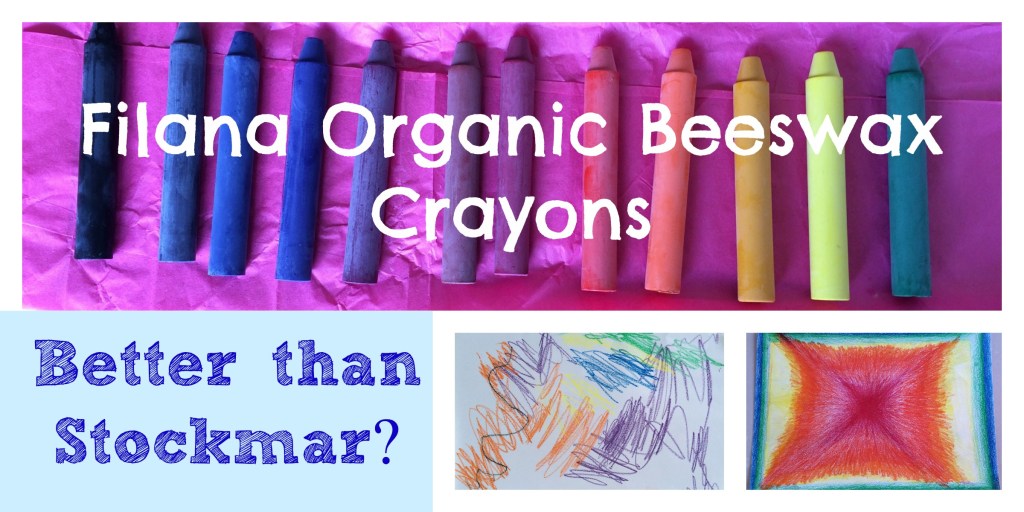
Several months ago, an Indiegogo campaign was launched to fund the initial production and distribution of a new line of beeswax crayons notably different from all others on the market. Filana Organic Beeswax Crayons were developed by artist, Waldorf educator, and publisher of Waldorf Today, David Kennedy, who had been working for many years to develop a product that until now did not exist: an organic beeswax crayon that contained no petroleum derived products.
Stockmar crayons chock full of petrochemicals??
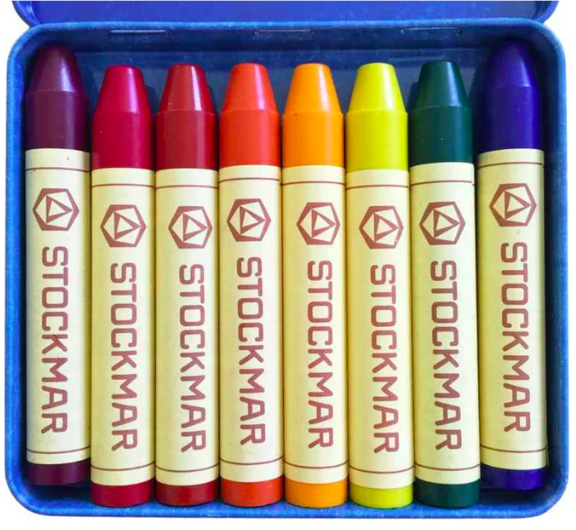
It may come as a surprise to you, as it was to me, that Stockmar Beeswax Crayons, beloved in Steiner schools worldwide, contain 50% petroleum derived/paraffin oils and just 10% beeswax. This revelation, initially exposed through Amy at The Mindful Home, left many in the Waldorf community feeling somewhat misled and likely contributed to the Filana Indiegogo campaign’s overwhelming success (he raised $21,203 with a $18,000 goal). Indeed, Mr Kennedy was not shy about promoting Stockmar’s shortcomings on the campaign page for those who were still unaware, declaring that his products would contain ZERO petroleum based oils and went even further to say that his crayons would be both GMO-free and organic. My inner hippie pricked up her ears.
In Amy’s communications to Stockmar attempting to get to the bottom of their ingredients, Stockmar justify their use of paraffin:
” …we currently have no viable alternative to paraffin that would be resource conserving and ecologically friendly and at the same time maintain the colouring quality of the product to the extent of the high melting paraffin we use”.
If this is so, I was interested to see if Filana could succeed where Stockmar could not. As it turns out, Filana founder David Kennedy is one of a handful of people in the world who can produce artist grade pigments from plant materials. He was chosen to learn the craft of plant colour pigment manufacture at a research laboratory in Switzerland during his studies at the Painting School of the Goetheanum. His expertise in colour theory and, in particular, how colour may best be expressed in the Waldorf classroom is what makes the Filana launch so special. If anyone was up to the task of creating an improved beeswax crayon, this was likely the man for the job.
Beeswax content
An important emphasis among Steiner education is providing our children with creative materials that are all natural. Beeswax is heralded as a wonderful medium to work with for children, as it is responsive to the warmth in their hands and wholesome to use. Filana promised 25% organic beeswax content in their crayons, which is more than double what Stockmar offer. This can be viewed both positively and negatively – higher beeswax content “seems” like a good thing to have in a natural beeswax crayon but, as Stockmar rightly point out in their response to the recent criticism:
“In the interests of bees, whose numbers are under threat worldwide, any use of beeswax should be acutely conscious, measured and responsible…Why use more beeswax in our crayons if it wouldn’t enhance the product quality and would only unnecessarily consume a precious natural product? That is precisely why Stockmar consciously uses 10% beeswax for its wax crayons”.
Point well taken. Others have also raised these concerns online through the Filana Indiegogo campaign page, but so far I have not seen a response from Filana. I’d be keen to hear their take on this.
Comparing Stockmar and Filana
Since Stockmar have been the gold standard in artistic materials on the Steiner scene since their development in the 60’s, it is not surprising that they offer a very high quality product with stunning colours precisely graded according to Goethe’s colour wheel. The colouring experience of Stockmar crayons is rewarding: they glide on the paper, they are pleasant to hold and are a perfect size for little hands. They are available in both block and stick varieties. They don’t come cheap however: a pack of 16 is likely to run you about $30, give or take. At this price, you’d expect something different from the other run-of-the-mill, mass generated crayons on the market, yet there is no getting past the fact that they are made up of 50% paraffin. Add to the fact that there wasn’t a whole lot of transparency on this matter until Amy’s post forced Stockmar’s hand, and you have a market ready for a new alternative. Filana also offer both block and stick varieties, and stay faithful to Goethe’s colour wheel. Plus, at time of writing this post, Filana crayons are cheaper. So, I got in on this Filana campaign eager to give them a go and promptly ordered a 24 crayon set (12 stick, 12 block), which I split with a friend here in Australia. At $22 for international shipping on crayons, you want to pool your resources!
The Verdict
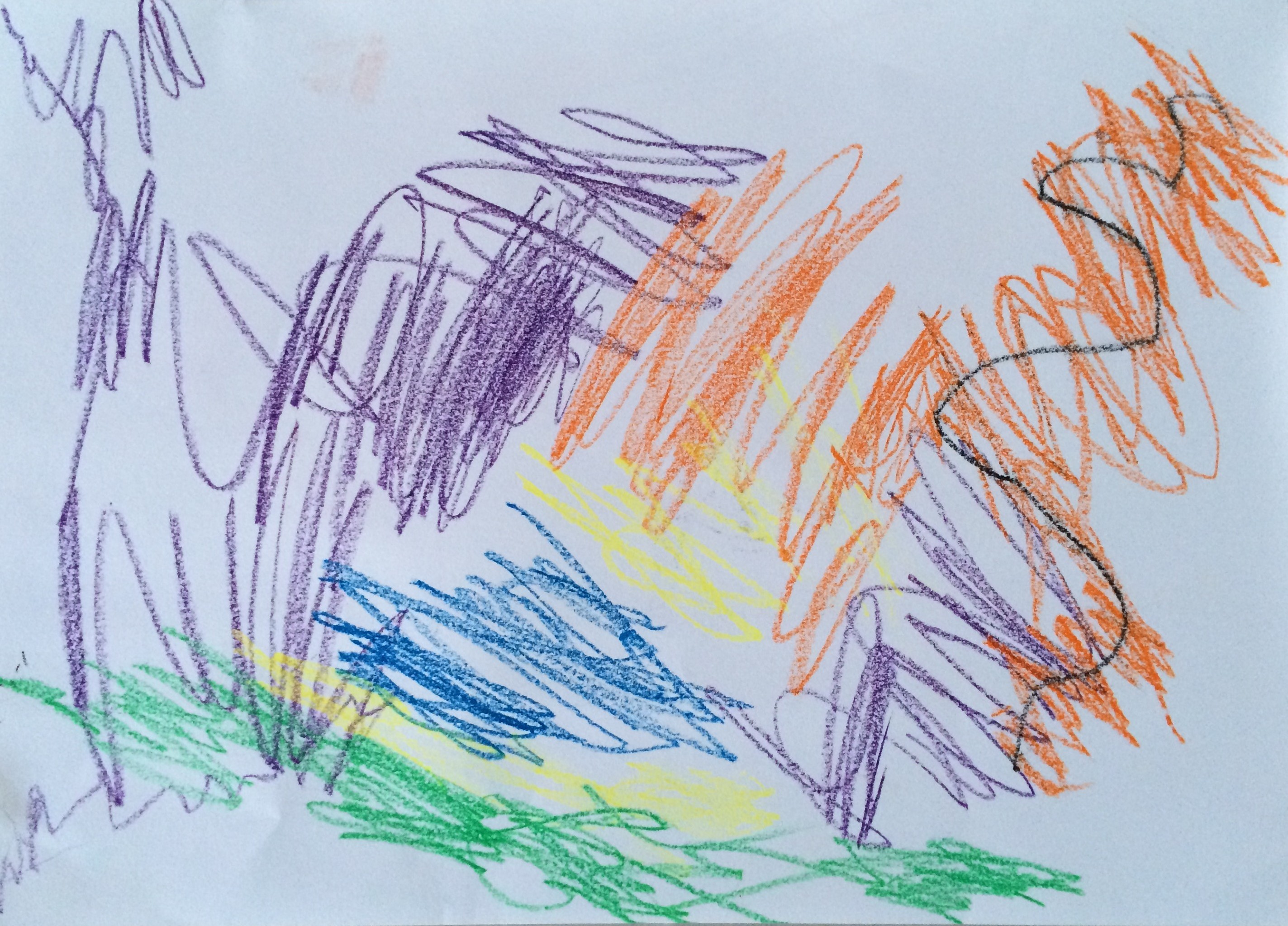
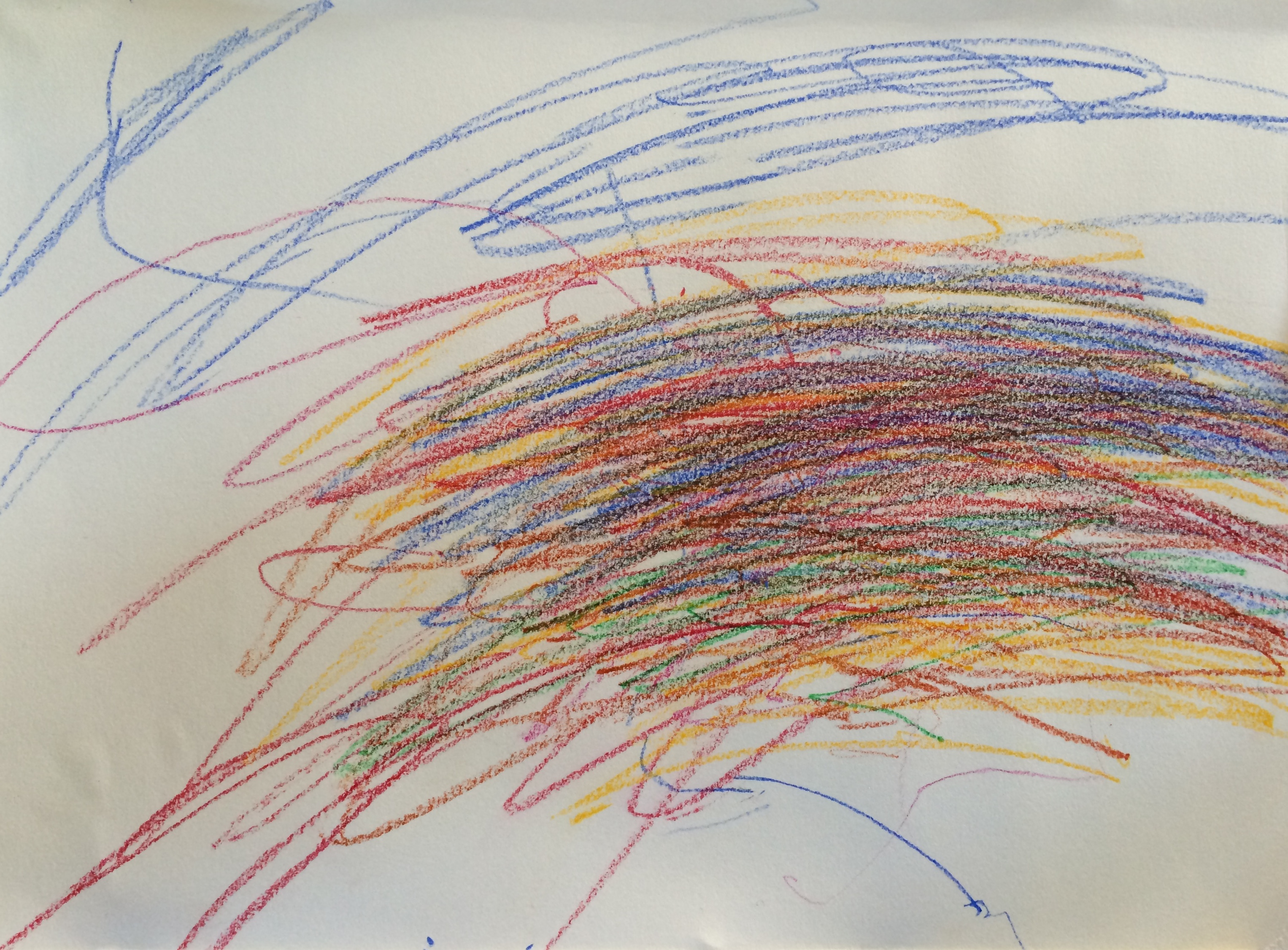
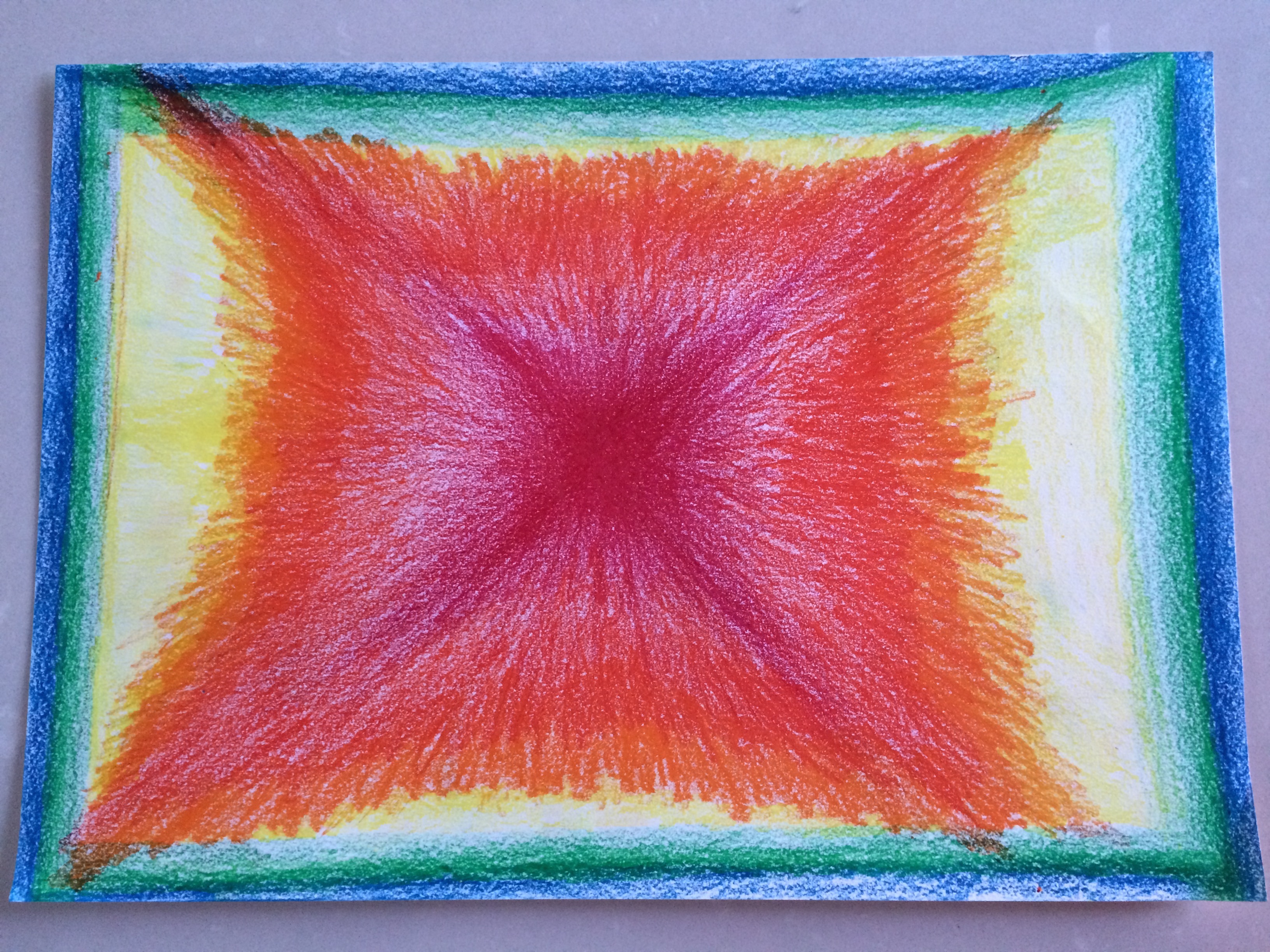
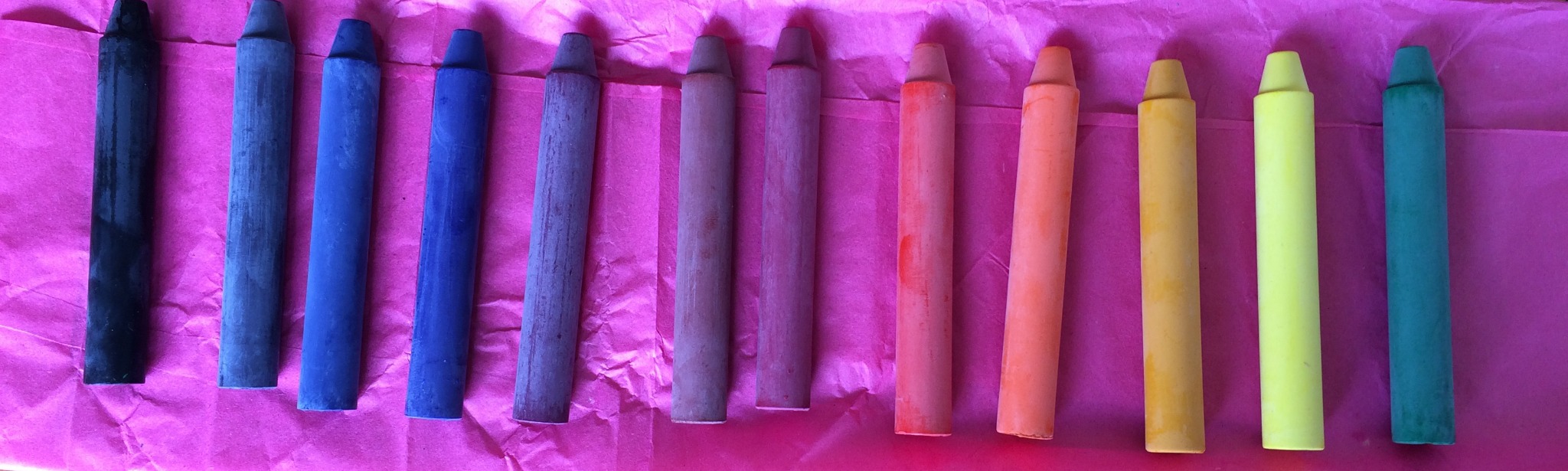 Once the crayons arrived, we set to work trying them out. The colours, as promised, were vibrant and stunning. The crayons respond beautifully to pressure and blend perfectly. I personally was very happy with the end product. I’d even go so far as to say I like them better than Stockmar.It is worth mentioning though that my friend, who I split my order with, was unhappy with the fact that the colours came off on her children’s hands, and she had not had this experience with the Stockmar crayons.
So you may judge for yourself the colour quality of Filana, I have included some recent masterpieces made by our family. The first from Master C, the second from Baby J and the last from yours truly.
After years of research and development, it appears that Mr Kennedy has realised his goal of creating a stable product made without paraffin and using a higher beeswax content than any other. I can imagine this was no mean feat. I offer my congratulations on a job well done. Interested in ordering a set of your own? Filana are now selling direct to the public on their website here.
Have you tried Filana crayons? What do you think? Add your voice below.
Thanks for popping by! See you next week.
xx
Robyn


 We Do Waldorf
Leave a reply to Sonya Cancel reply